Faith First, Fame Second: How John Waller Keeps His Music Honest in a Commercial World
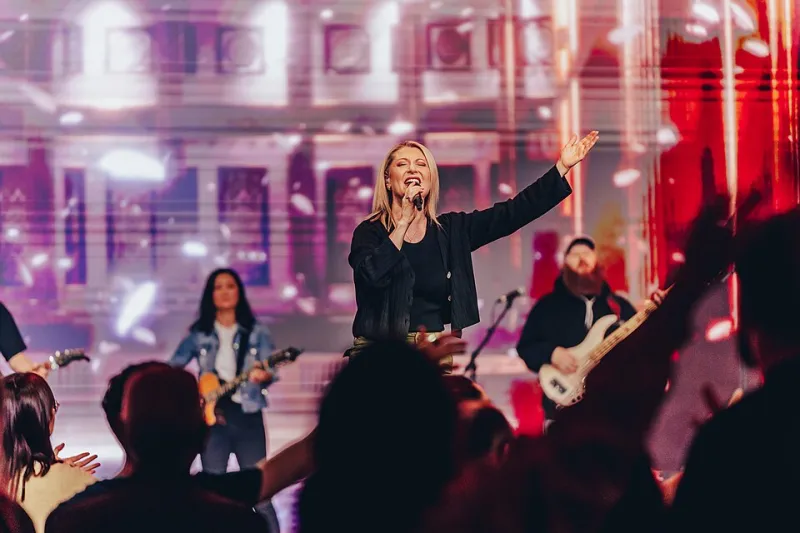
Photo: Oscar David Jessurum Maury, CC BY-SA 2.0, via Wikimedia Commons
There's a conversation that happens in Christian music circles that rarely makes it onto a press release. It goes something like this: Is this song ministry, or is it a product? It's an uncomfortable question, and most artists dodge it. John Waller doesn't. He's talked openly — in interviews, from the stage, in the margins of his story — about the friction that exists between making music that moves units and making music that moves souls. And honestly, the fact that he's willing to sit in that tension is a big part of why his audience trusts him.
The Business Is Real — And So Is the Calling
Let's not pretend the Christian music industry runs on prayer alone. There are labels, marketing budgets, radio consultants, and streaming algorithms. Songs get tested. Hooks get workshopped. Radio edits get made. None of that is inherently corrupt — it's just the reality of getting music from a recording studio into someone's earbuds on a Tuesday morning commute in Des Moines or Charlotte.
For a worship leader like John Waller, that system presents a specific kind of challenge. Worship music has a purpose that goes beyond entertainment. It's designed to facilitate an encounter — between a person and God, between a community and something bigger than themselves. When you start optimizing that experience for radio metrics, you risk sanding down the very edges that make it spiritually potent.
Waller has navigated this by keeping the origin point of his songwriting stubbornly personal. Songs like While I'm Waiting didn't start as commercial propositions. They started as honest responses to real circumstances — doubt, grief, hope, surrender. That's the raw material. The production decisions come later, and they serve the song, not the other way around.
When Radio Success Becomes a Double-Edged Sword
Here's the irony that worship artists often face: the more successful a song becomes, the more it risks becoming background noise. A song that once stopped someone in their tracks can, after a thousand plays, become wallpaper. That's not a criticism of the listener — it's just how familiarity works.
For Waller, the response to that dynamic has been to stay close to the live experience. In concert settings and smaller worship gatherings, he has the ability to slow things down, to talk about where a song came from, to invite the audience into the actual story rather than just the polished version. That context changes everything. A lyric that might float past you on Spotify lands differently when the person who wrote it is standing twenty feet away and telling you about the night it came to him.
That's not a scalable business strategy — it's a pastoral one. And it reflects something real about how Waller seems to think about his role. He's not just an artist delivering content. He's a worship leader who happens to record albums.
The Compromise Question
So has he ever compromised? That's the honest question, and the honest answer is probably: it depends on how you define the word. Every artist who works within an industry structure makes concessions. Song lengths get adjusted. Album sequencing gets debated. Certain lyrical directions get encouraged over others.
What seems to distinguish Waller's approach is where he draws the line. The theological core — the vulnerability, the acknowledgment of struggle, the refusal to offer easy answers — stays intact. You won't find him pivoting to feel-good anthems just because they chart better. The songs that made him a trusted voice in Christian music were the ones that told the truth about how hard faith can be. Walking away from that would mean walking away from the audience that found him in the first place.
There's also something worth noting about the Courageous film connection. When his music reached millions through that movie, it wasn't because he chased a film placement — it was because the music was already doing what it was supposed to do. The commercial opportunity followed the authenticity, not the other way around.
What This Means for the Rest of Us
For fans who've grown up with Waller's music, there's something genuinely encouraging about watching an artist hold this line over the long haul. It's easy to stay pure when you're unknown. Staying grounded when you have a platform — when there are real financial stakes, when people are counting on you for their livelihoods, when the industry is pulling in a dozen different directions — that's the harder test.
Waller's career isn't a fairy tale about an artist who never faced commercial pressure. It's a more interesting story than that: an artist who faced all of it and kept finding his way back to the reason he started writing songs in the first place.
That's the kind of legacy that outlasts any chart position.